-
UI & Product Designer
-
Conceptual Mobile Smart Home App
-
Product design, high-fidelity screens, design system, microinteractions, animated prototypes.
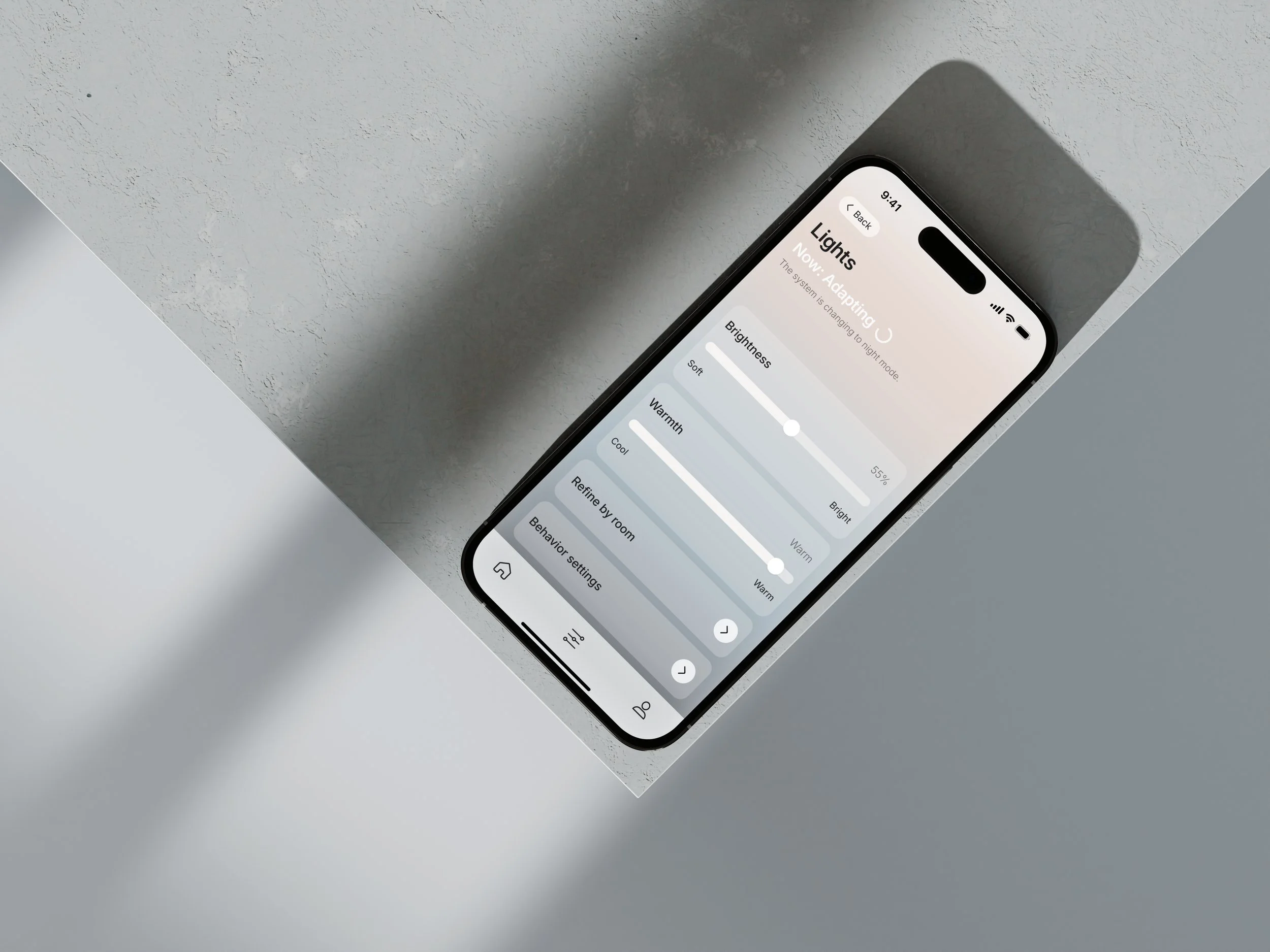
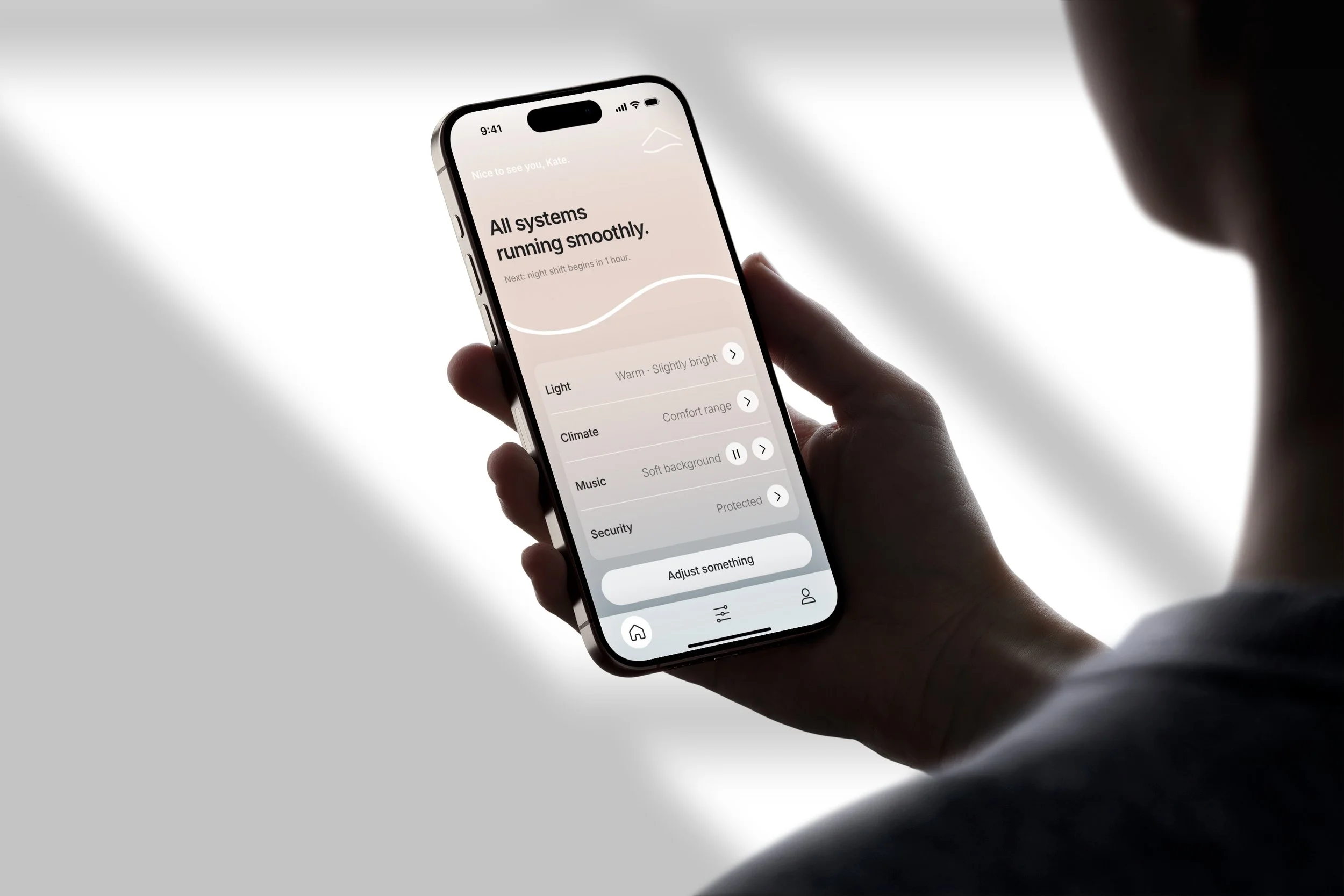
STATE is a smart home control app that unifies light, climate, sound, and security into a single and cohesive system. Instead of presenting isolated device panels, the app focuses on the overall state of the home, showing what’s happening now and allowing users to adjust their environment through intuitive controls or conversational input. Through subtle motion, real-time feedback, and a calm interface, STATE transforms home automation into a fluid and system-driven experience rather than a collection of switches.
Problem
Most smart home apps are built around devices. Users navigate through fragmented controls, toggles, and dashboards that feel technical and reactive. The experience often prioritizes features over clarity, creating cognitive overload and reducing the sense of control.
Solution
STATE reframes the smart home as a living system rather than a device manager. Instead of controlling individual components in isolation, users interact with the entire environment of their homes.

Insights
The home should feel unified, not modular.
Single system with interconnected layers rather than separated controls.
Status should come before control.
Users first need to understand what is happening before deciding to change it.
Motion should communicate behavior.
Animation used as feedback.
Technology should feel calm.
Every decision supports a tone of reliability and balance.
Core paths
System overview
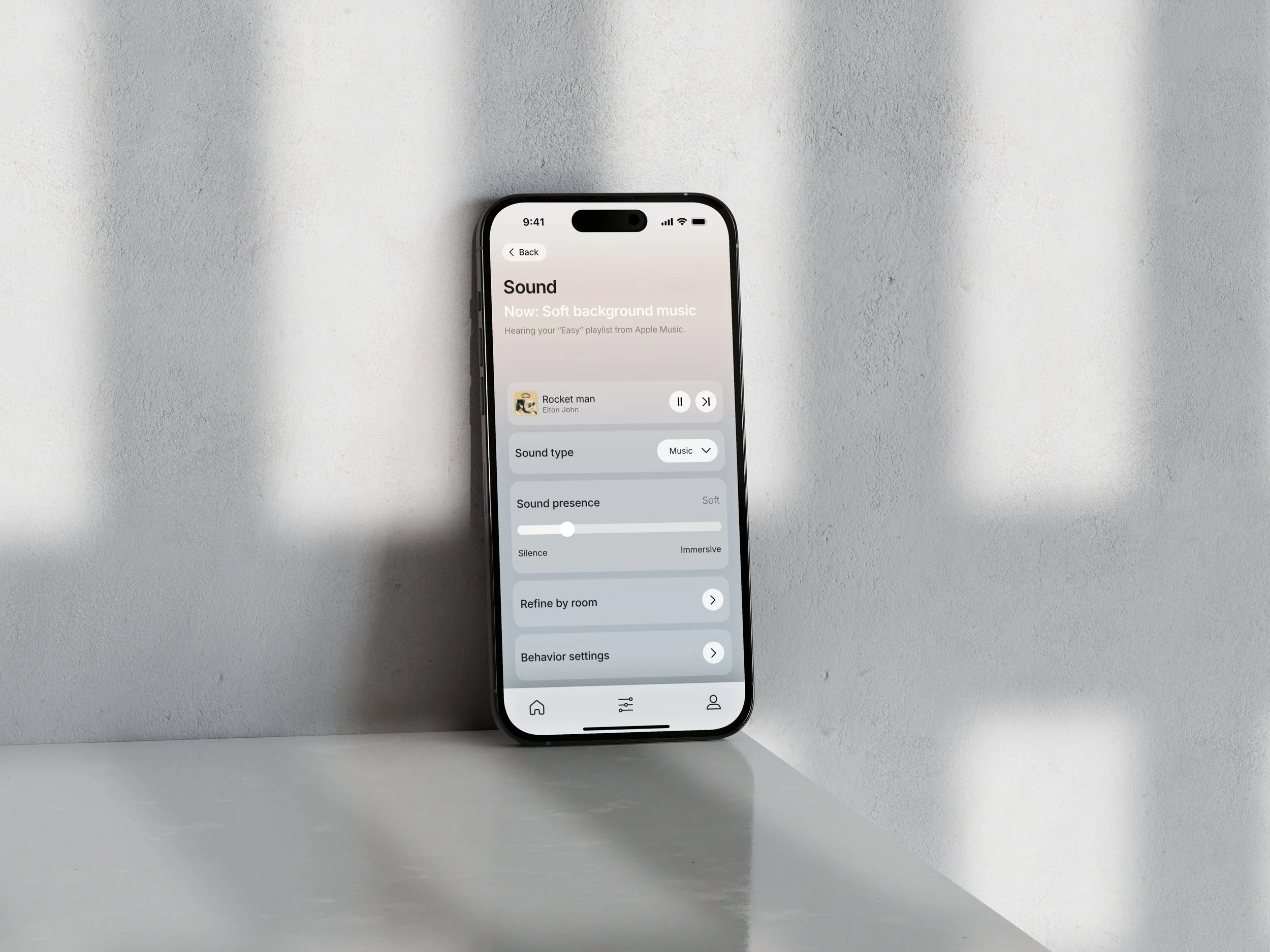
Displays the current state of the home at a glance
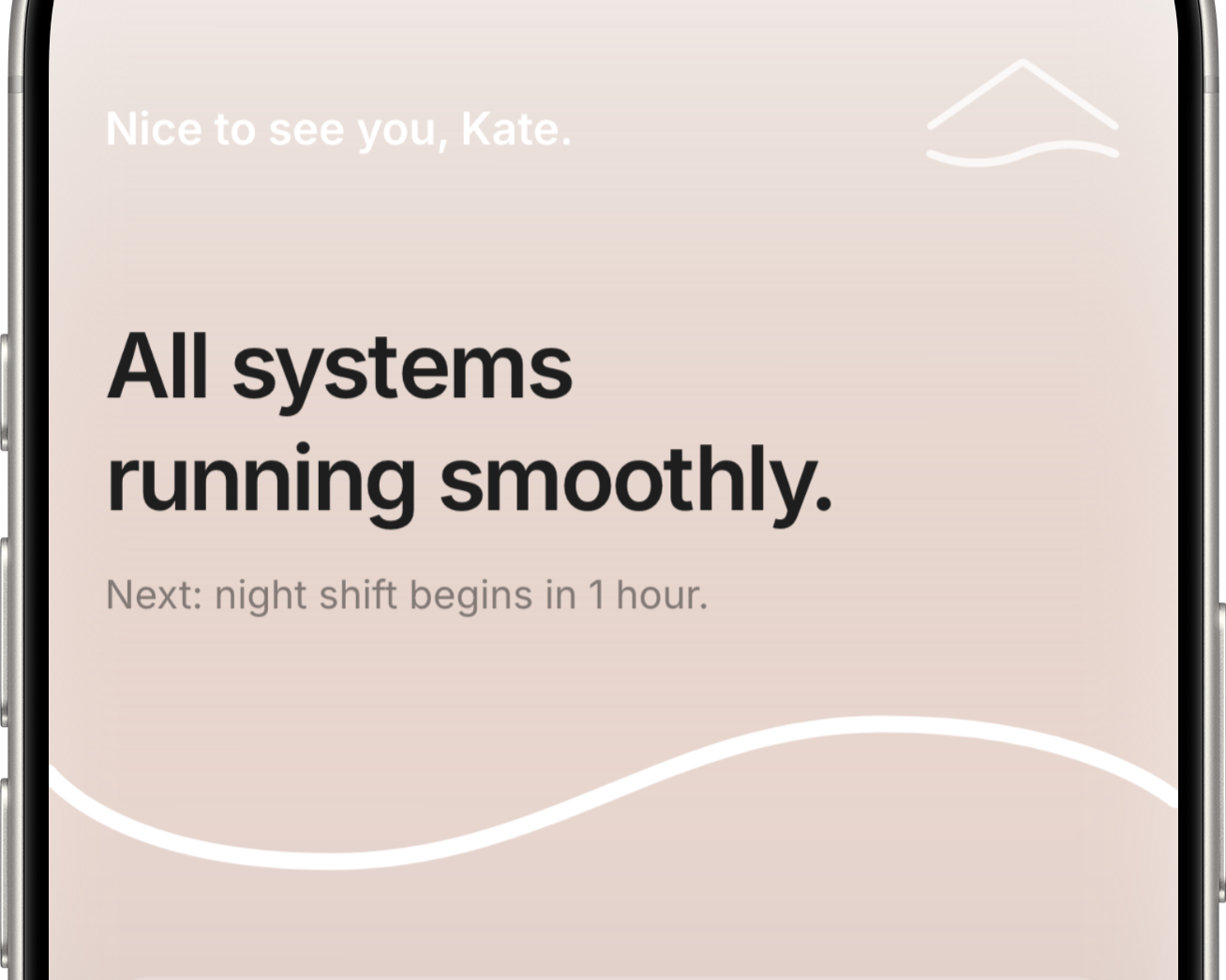
What’s happening
Communicates what is happening now and provides access to quick adjustments
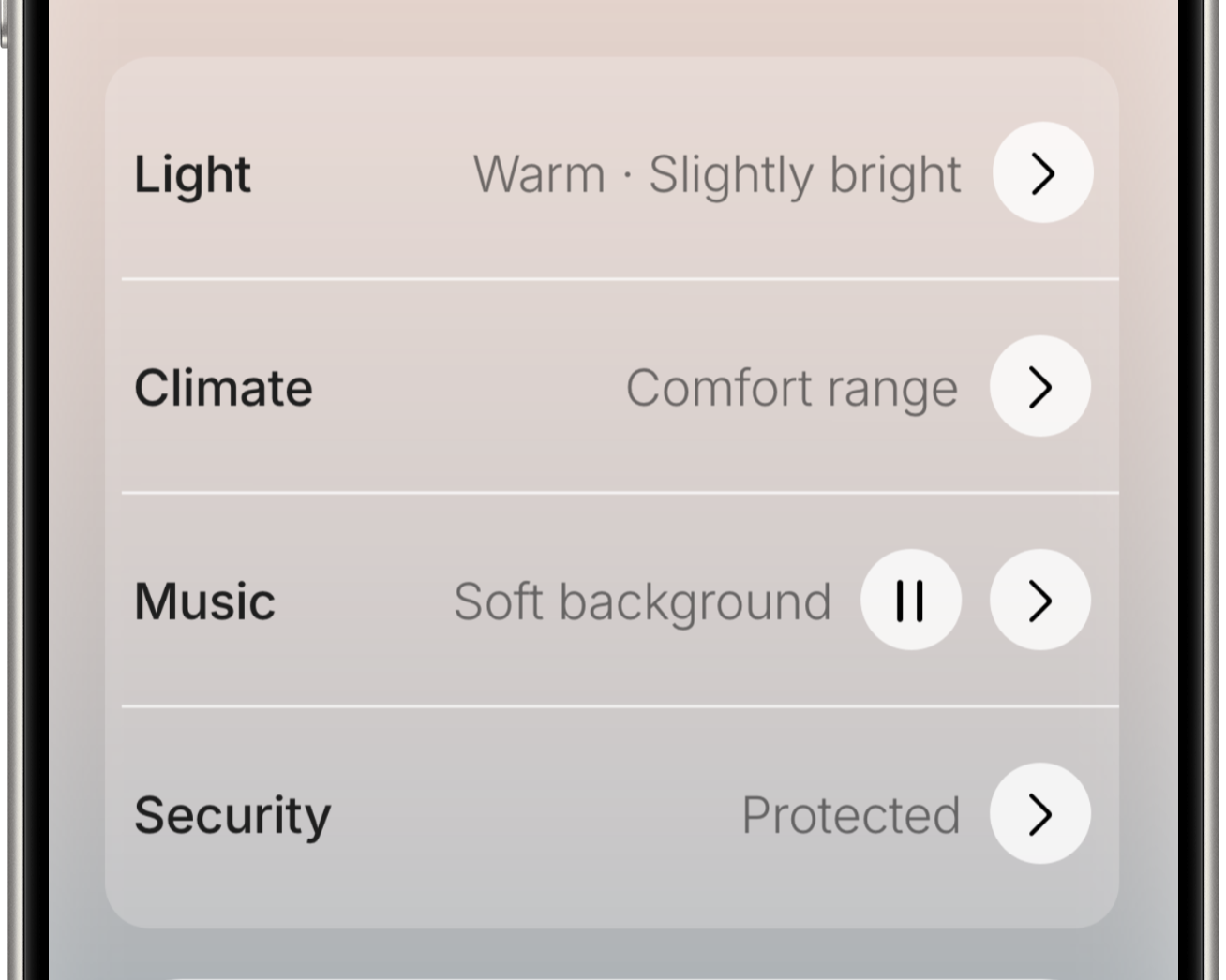
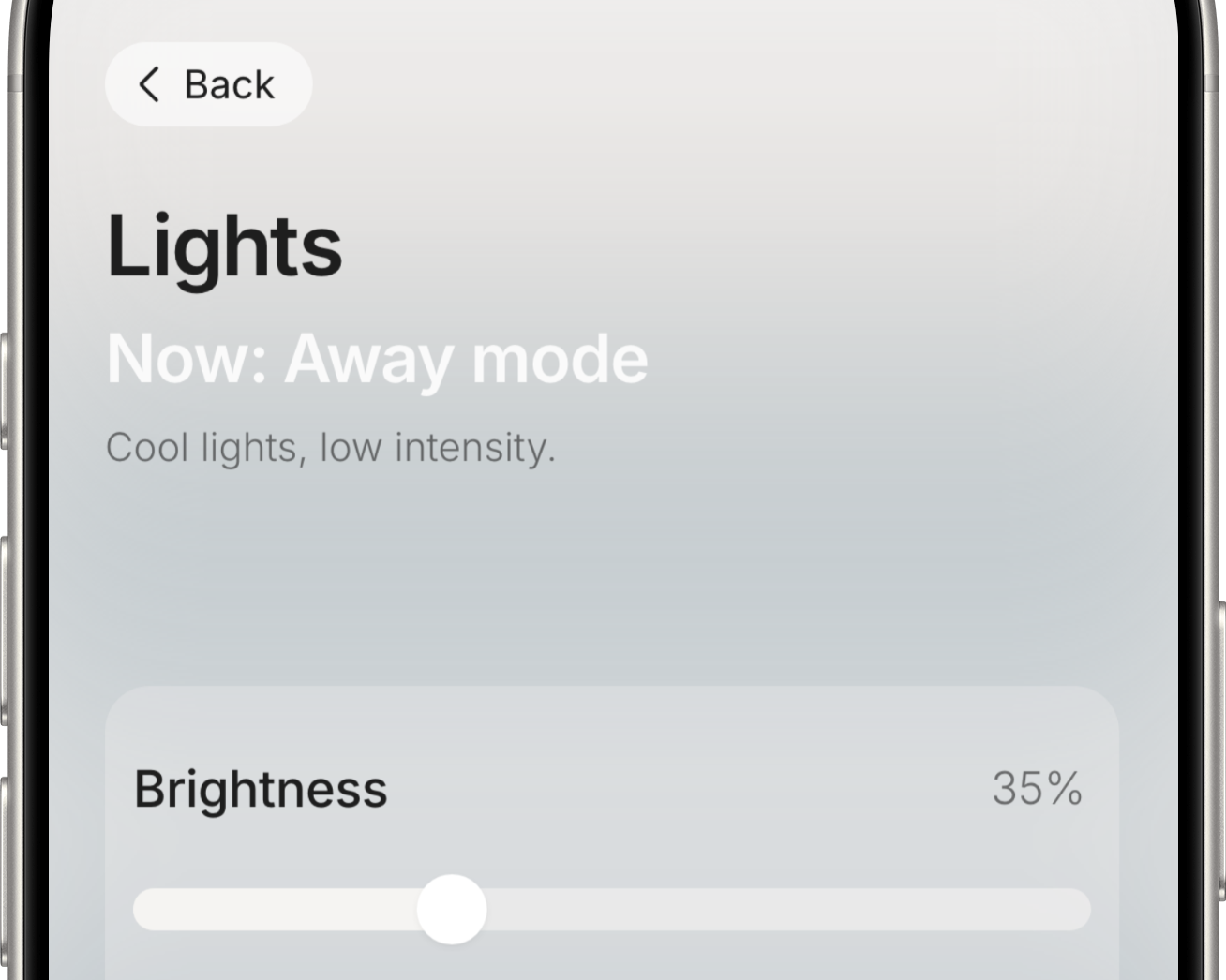
Parameter control
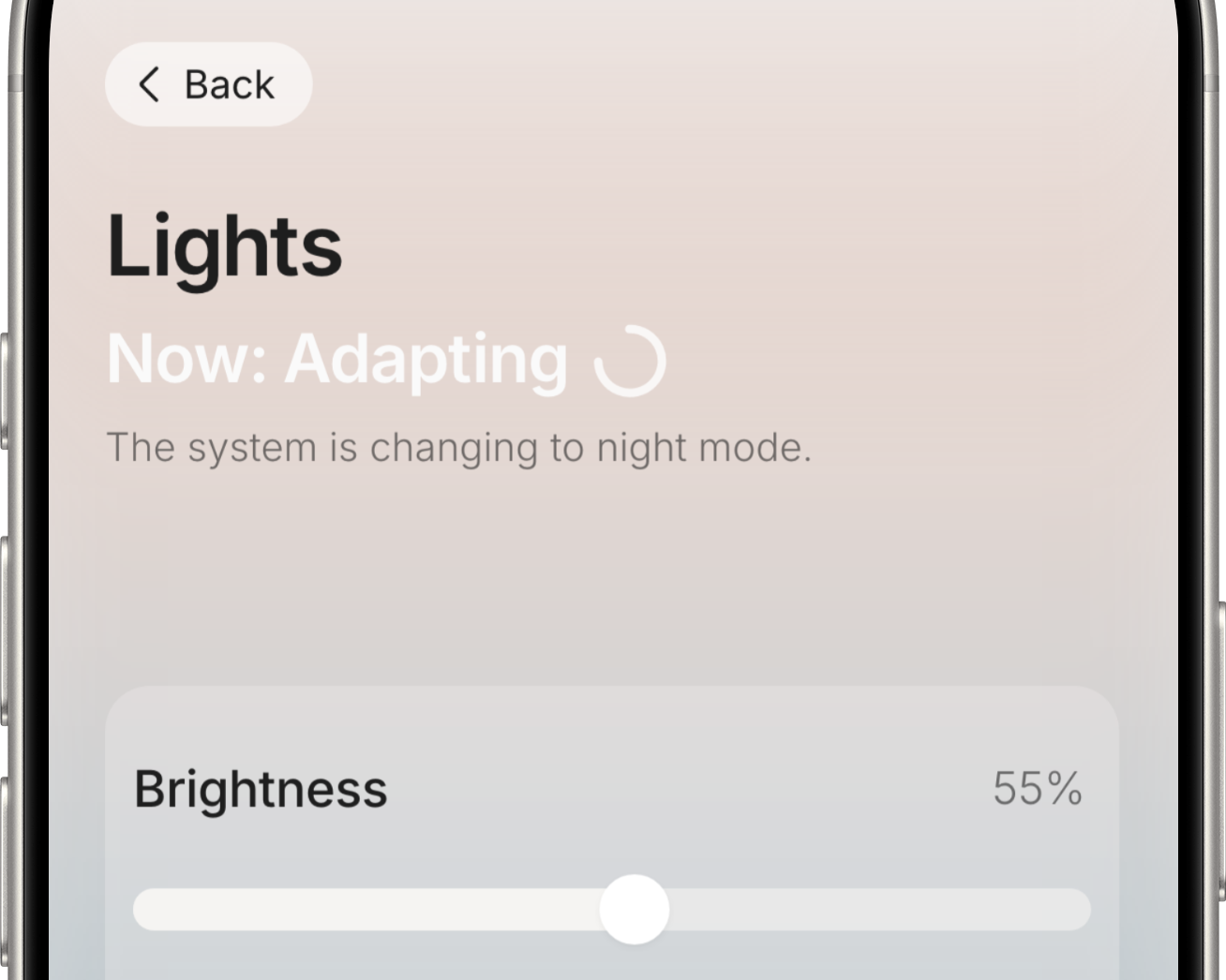
Adjust each parameter with real-time feedback and gradual system adaptation
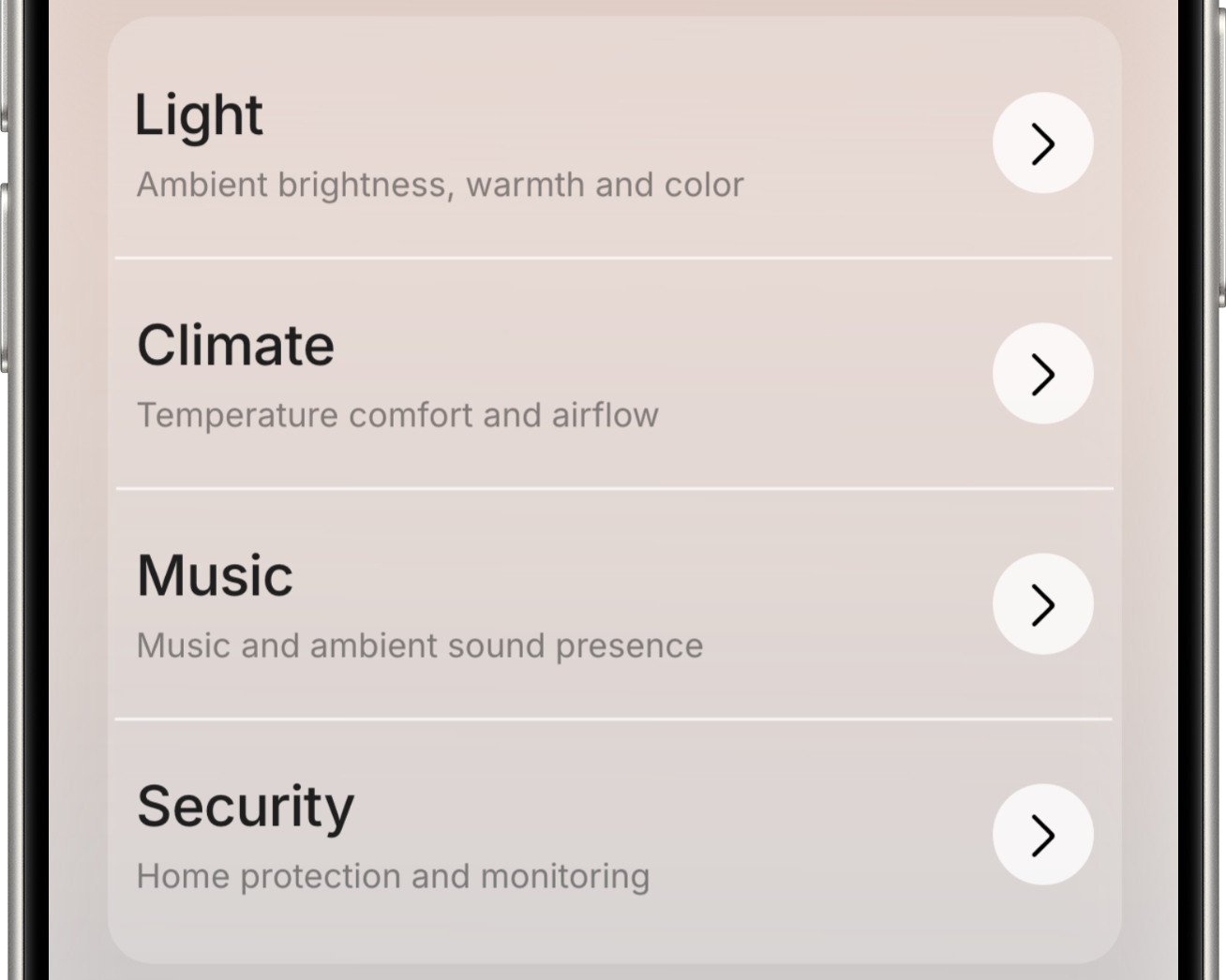
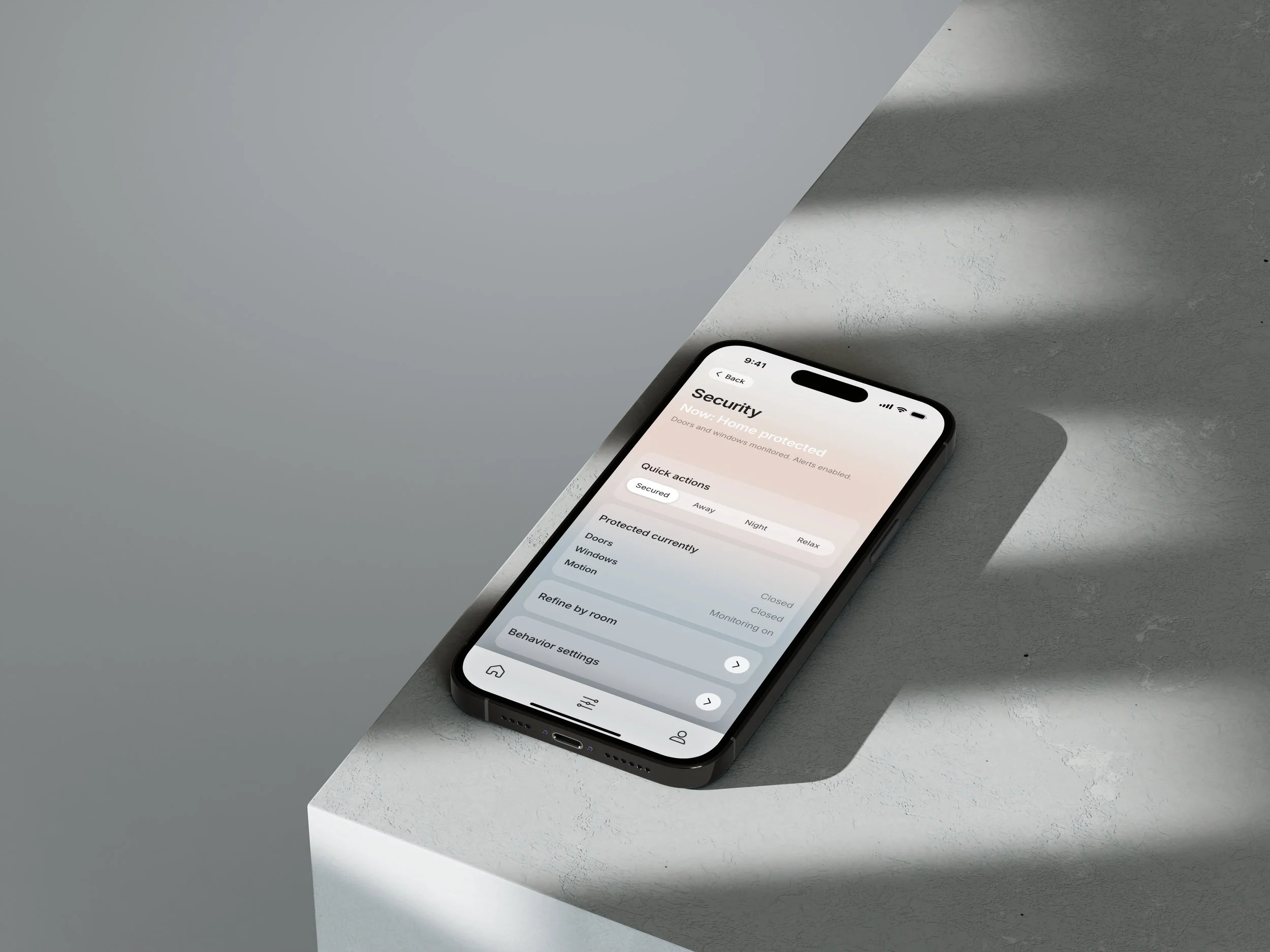
Apply predefined states, define how the home behaves over time, and set routines and environmental transitions.
Behavioral modes
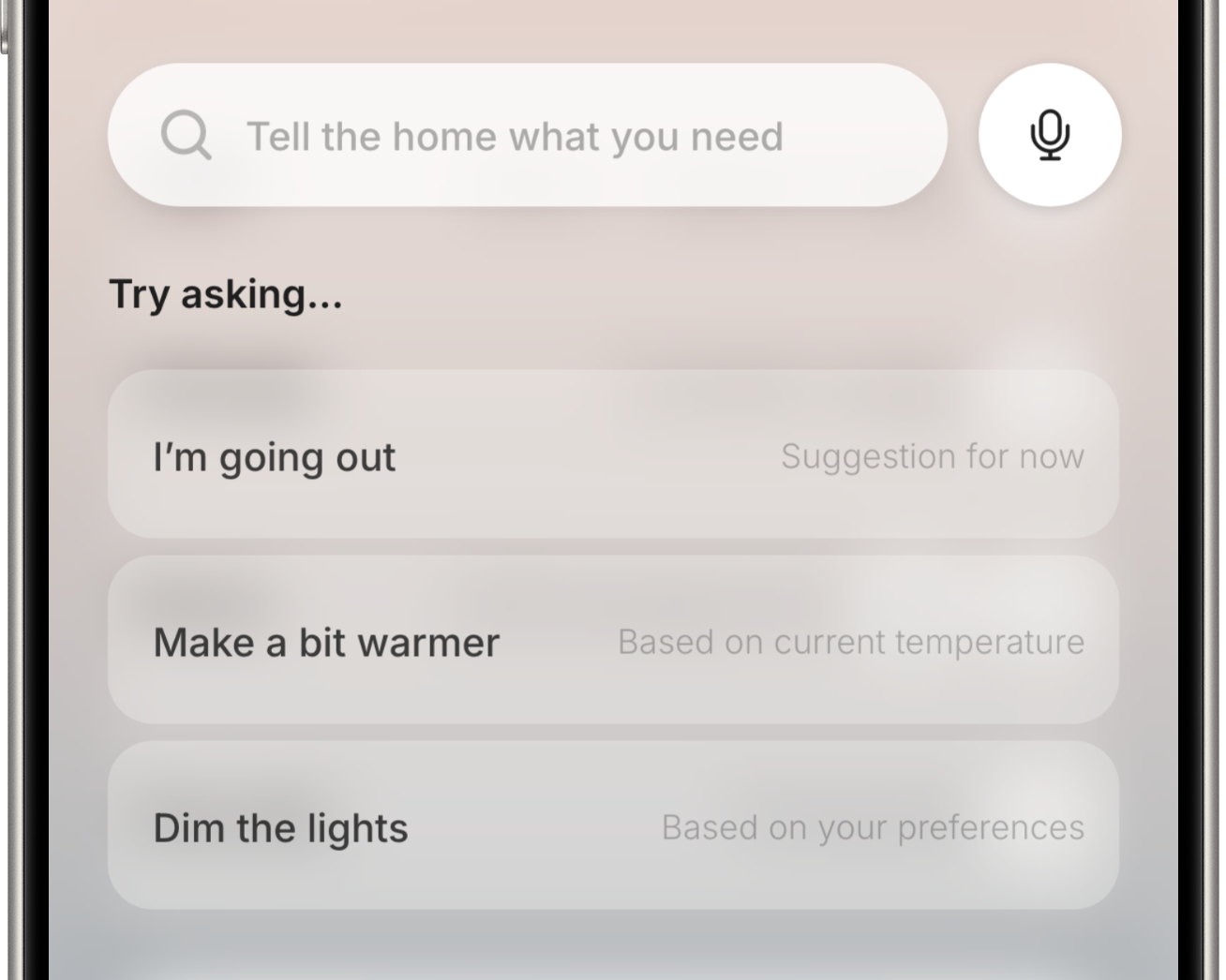
Conversational Input
Allows the user to type or speak requests at the time that provides contextual suggestions
Real-time visual feedback
Dynamic gradient transitions reflecting environmental changes